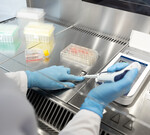
Rapid blood test can detect iron deficiency in minutes
27 August, 2026Scientists have developed a blood test that can detect iron deficiency in just 15 minutes, overcoming key limitations of existing point-of-care diagnostics.
Common carp relatives could help stop virus spreading
17 August, 2026While common carp are highly vulnerable to koi herpesvirus, their close relatives including goldfish, grass carp, silver carp and black carp rarely become infected naturally.
Could this human tissue biobank find the cause of a bowel cancer surge?
31 July, 2026 | Supplied by: University of the Sunshine CoastIn a new Australian biobank, lab comparisons of tissue donated by cancer patients will explore how to prevent and treat the deadliest cancer in 25- to 54-year-olds.
Microscopic life is mining decades-old toxic waste
21 July, 2026At abandoned Flinders Ranges mines, stable radioactive and toxic metals are being turned into mobile nanoparticles that can easily travel through the environment.
Dual-bubble approach achieves microplastic removal rates of over 90%
16 July, 2026Using a combination of microbubbles and nanobubbles, Australian scientists have developed a method of capturing microplastics from wastewater.
Neuroproteomics facility offers researchers a new perspective on MND and neurodegeneration
09 July, 2026 by Stephen Downes, Macquarie University | Supplied by: Macquarie UniversityThe National NeuroProteomics Facility recently commenced operations at Macquarie University. Stephen Downes speaks with its academic director.
Absorbable scaffolds regenerate lost breast tissue
03 July, 2026 | Supplied by: BellaSeno GmbHThirty Australian women have now undergone restorative breast surgery using an absorbable scaffold technology specifically designed to regenerate lost breast tissue.
Prostate cancer therapy aims for first-in-human clinical studies in 2027
25 June, 2026UniQuest, the commercialisation company of UQ, has entered into an exclusive licence agreement with the Ellison Medical Institute.
Museum specimens support future biodiversity monitoring
11 June, 2026An eDNA library has been created using museum specimens and genomic data from fish monitoring across Northern Territory catchments.
From waste CO2 into valuable chemicals
11 June, 2026An Australian-designed electrochemical generator promises a safer and more environmentally friendly pathway to convert waste CO2 into useful products.
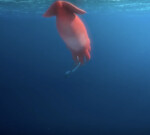
Giant squid found hidden in submarine canyons off Western Australia
07 May, 2026Using eDNA, Australian scientists have found hidden biodiversity off the WA coast, including the elusive Architeuthis dux and species possibly new to science.
Flinders works on method to filter nanoplastics from water
06 March, 2026Flinders University researchers are working on a method capable of detecting nanoplastics using plasma polymer-coated filters.
Could this 'PFAS trap' remove the most difficult-to-capture variants from water?
26 February, 2026Flinders University scientists have showcased the use of a nano-sized molecular cage that acts as a highly selective 'PFAS trap'.
March workshops seek to empower NT flood evacuees
25 February, 2026In March, a workshop series will bring together researchers and community members to co-design a data dashboard unique to the needs of the Northern Territory.
What journalists expect from the scientists they speak to
29 January, 2026 by Richard Stone* | Supplied by: Stone Junction LtdPeer review is often treated as the end of the story, but for journalists it is usually the point where the story becomes possible — here's what they expect.