Pressure, temperature and humidity monitor
05 June, 2009 | Practical Control Solutions
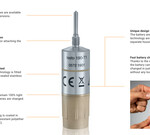
The GFTB100 environment monitor is a versatile instrument that can be used to measure atmospheric pressure, relative humidity, absolute humidity, temperature, dewpoint temperature, wet bulb temperature and microscope content.
Extensional rheology system
05 June, 2009 | Rheology Solutions Pty Ltd
The SER system is an accessory for the Haake Mars with CTC oven which transforms a rotational shear rheometer in an extensional rheometer for melts and semi-solids.
Intracellular RNA stabilisation
05 June, 2009 | QIAGEN Pty Ltd
PreAnalytiX has received marketing clearance from the US Food and Drug Administration for the automation of the PAXgene Blood RNA System on the QIAcube. This clearance enables laboratories to automate an IVD purification method which is part of an integrated IVD blood collection method for intracellular RNA.
Triple quadrupole GC/MS
05 June, 2009 | Keysight Technologies Australia Pty Ltd
The Agilent 7000A GC/MS triple quadrupole system can be used for low-level analysis of environmental samples, including pesticides and endocrine disruptors in waters, sediments and treatment plant effluents.
Compression testing
05 June, 2009 | Power Parameters Pty Ltd
The Time Group YAW Hydraulic Testing Machines are suitable for compression testing of hard, brittle materials including cement, concrete and other construction materials.
Automated pipetting system
05 June, 2009 | Eppendorf South Pacific Pty Ltd
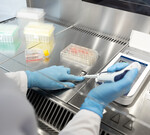
The epMotion 5075 TMX automated pipetter features an integrated Thermomixer to shake and heat or cool sample tubes and plates.
GC micro-channel wafer technology
05 June, 2009 | PerkinElmer (Australia) Pty Ltd
The Swafer micro-channel wafer technology platform is designed for flow-switching applications in capillary gas chromatography (GC). The platform provides Clarus Gas Chromatograph users with additional application flexibility while improving sample information, sensitivity and throughput.
Temperature measuring system
05 June, 2009 | OneTemp Pty Ltd
The Datapaq Food Tracker temperature profiling system measures the actual product and ambient temperature during cook/fry/chill processes.
Interactive image visualisation software
05 June, 2009 | SciTech Pty Ltd
The Bitplane Imaris 6.2 image visualisation software provides a set of features for working with 3D and 4D multi-channel images of sizes ranging from a few megabytes to multiple gigabytes. The easy-to-use system allows users to conveniently load, process and visualise images acquired from almost any confocal and wide field microscope to view image data in both 3D and 4D.
Bioimaging workstation
05 June, 2009 | Olympus Australia Pty Ltd
The FSX 100 workstation allows for the acquisition of transmitted light, phase or fluorescence images, and features auto exposure and focusing for simple operation.
Oxygen generator
05 June, 2009 | John Morris Scientific Pty Ltd
The Cellexus Oxygenator oxygen generator is a standalone module that takes in air and concentrates the oxygen component to generate a stream of 93% (±3%) pure oxygen.
Infectious disease antibodies
05 June, 2009 | Sapphire Bioscience
The Abcam portfolio of antibodies for bacteriology, protozoa and infectious diseases includes antibodies against: Anthrax, Aspergillus, Cholera Toxin, Campylobacter, Chlamydia, Clostridium botulinum, Helicobacter pylori, Mycobacterium tuberculosis, Salmonella, Staphylococcus and Streptococcus.
Online microarray design tool
05 June, 2009 | Keysight Technologies Australia Pty Ltd
The eArray 5.4 online microarray design tool enables users to design custom microRNA (miRNA) microarrays.
Cell transfection
05 June, 2009 | Applied Biosystems Pty Ltd
The Invitrogen Neon Transfection Device is a benchtop tool that enables researchers to better understand the functions of cells, genes and proteins. This device simplifies the delivery of DNA, RNA and proteins into a wide range of mammalian cell types, especially difficult-to-transfect cells, such as many types of primary and stem cells.
Video tracking for animal behaviour
05 June, 2009 | SDR Scientific
The Smart System is a user-friendly video tracking system for evaluating behaviour in experimental animals.